
The Seeds of St Benedict, sown in St Philip – and us
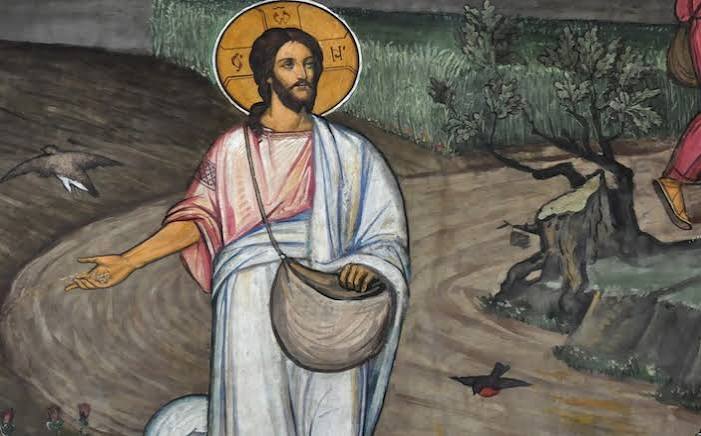
You can picture the scene of inevitable destruction: widespread political unrest, violence on people, honoured and ancient institutions; there is an invasion also of ideas contrary to Christ and the truth; inevitably, high taxes and low social satisfaction. This is the fifth century. The Western empire is about to fall. Most people, looking upon such a world, would have asked, “How do we stop the Empire from collapsing?” The Lord would not provide an army, a rival emperor or a new constitution – the Lord instead plants a seed in the heart of St Benedict, whose feast day we celebrated yesterday. While the world is in turmoil, Benedict reflects rather on the interior turmoil of the human heart – he withdraws to the solitude of Subiaco, desiring to find God in the midst of chaos, without distraction. Slowly, others join his path of prayer, discipline and study; a community grows in the fertile soil of that monastery – and, even accidentally, a safeguard for Christian civilisation, and renewal, itself.
This seed was to be sown again, many years later, in the sixteenth century in the heart of a young Florentine, who was certain that God wanted him to abandon a life of finance and worldly vice. Philip Neri, only about 18, is on his way to Rome – and finds himself at the Benedictine community of Monte Cassino. What he witnessed there, Newman would reflect, was how he would later live in Rome in the Oratory, which he founded, also accidentally. In many ways, this foundation in Rome would lead to its renewal and preservation, too.
What seeds did St Benedict sow, and what took root so radically in St Philip?
- Sacred Liturgy at the heart
“Let nothing be preferred to the Work of God,” St Benedict would urge in his Rule, the way he described for his sons in the community. Principally, this meant their fidelity to the communal chanting of the Liturgy of the Hours, that enduring prayer of the Church, composed mostly of the Psalms. But it would have included the devout offering of Holy Mass, and the regular prayer of the community, also. This spirit of prayer pervaded all that the Benedictines did; it became a basis for their work, as a foundation and consecrating act.
And nothing, no matter how important, was to be preferred to it. Prayer was to be primary, seeking first the kingdom of God; everything else would follow, infused by this elevation of it, and all else, to the Lord.
- Stability
St Philip would have noted, also, the immovable stability of the monks, and in one place, for the duration of their lives. Their will to remain was a mark of their strength. They would exercise with particular exactness that virtue of perseverance, which would “win them their souls”. Generating a warm familiarity with the place and its people, this gift of perseverance which was sown into Benedictine hearts, was noticed and cherished by St Philip, who insisted on it for his own institute too. The Fathers join, with the intention of remaining, until the end of our lives – whether you like it or not, you’re stuck with us! We’re called, according to that image of the Lord in the Scriptures, not to put our hand to plough and leave it there; with his help, persevering to the end, we will plough until the plough can’t plough anymore.
Here, we persevere when things are going well, and when they’re more difficult. We don’t simply leave when a little frustrated or annoyed; we suffer through the trouble, and pray that we grow in virtue.
This immovable stability is a sign and symbol of God’s own steadfastness towards us; to persevere to the end is to imitate God’s Own nature.
- Community life
Not only did St Philip notice the primacy of prayer in the Benedictine house at Monte Cassino, supported by the perseverance of the monks. He noted their devotion to the common life. They were working out their salvation with fear and trembling, as St Paul urges us to do, but not in isolation. Each is responsible for his soul, but those souls are saved in relation to others.
The exercise of virtue, in relation to the other, is a rich seed-ground of holiness, in which the Lord can cause a great harvest to arise. Of course, stability makes this growth in community all the richer, staying with the same people for a very long time. We grow together, anticipating the needs of the other, with a keen awareness of the tastes and moods of each. Even simple exercises, like eating dinner together, are moments where our whole life is nourished, with the Fathers.
For us?
These three seeds – the primacy of prayer, of stabilising perseverance, and the gift of community – are offered to us, too, in the various ways that the Lord has called us to live. That is, the seeds sown in St Benedict and St Philip can be sown in our hearts also.
- We must prefer the work of God to all other works; this is not only a question of priority, but of preference. It’s very easy for us to choose other things before prayer, or to rush through our Divine duties in favour of others. But as St Benedict and St Philip teach us, spending time with the Lord, especially at the Sacred Liturgy, rightly orients our life. Here, we might make a promise to the Lord to come often for the celebration of Mass, even on weekdays – especially on feast days – to prefer nothing else to the work of God. In daily life, we can choose to pray before we pick up our phones; to spend time praying in the shower; to devote some time to prayer in the course of the day. We can punctuate our work with prayer according to that Benedictine motto – Ora et labora, work and prayer: a walk to our office with an Ave on the mind can bring many graces to the work we have to do; remembering to say grace before eating lunch expresses a preference to the work of God in some way.
- So much in the world is shifting and changing; there is much that imitates a “fast fashion” approach to life. We give up too easily, especially when things are difficult. We give up on others, on relationships, on our duties, often for selfish reasons. But what seed would Ss Benedict and Philip sow in us – that gift of stability and perseverance. There is so much value in beginning tasks in God, and asking Him to bring them to fulfilment, without the feverish desire to abandon. This happens so often in the spiritual life, where someone begins a good path, and then prefers some other path or mission, leaving God behind. We can’t do that, especially not to the Lord. If we want to grow in perseverance, we could begin with diligence in our daily tasks; and the Lord Who trusts us with little, will give us strength to be trusted with much.
- Finally, the Lord is asking us follow Him, not on our own, but in the context of community. This is a governing principle in the Benedictine monastery, and also in the Oratory. But it’s a reflection of the vision of communion that Christ shares with us, the members of His Mystical Body, the Church. The Lord calls us to find Him in relation to others. And so we must cherish our own community too – we must love our families, and spend time with them; we should extend ourselves to the faithful in this church community; we can grow in those intimate groups where the Lord has called us to serve and grow; we can ask the Lord to make us grow in communion with the poor and outcasts, also, drawing them into this community of love.
What will this achieve? St Benedict accidentally saves western civilisation with his mission; St Philip renews Rome. But their primary end, in being this seed-ground for God, is the salvation of their souls. Our world needs saving too, being so often on the brink of destruction. Maybe the Lord is asking us to be a little more willing to be a monastery, an Oratory, for our salvation also?
May Ss Benedict and Philip pray for us.