
25 & 26 April 2026, 4th SUNDAY OF EASTER
Dear Friends,
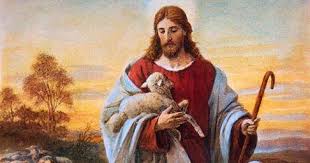
This Sunday, Good Shepherd Sunday, we hear Our Lord say: “My sheep hear my voice.”
In Rome, it is customary for the Holy Father—Pope Leo XIV—to ordain new priests on this day. These are men who, in some way, have heard the voice of the Good Shepherd. They have recognised His call—not only to follow Him, but to share in His work of shepherding the flock. At the ordination, the Holy Father reminded them that they are to be a “channel, not a filter,” helping others to hear the voice of Christ.
This moment in the life of the Church is both beautiful and visible. Yet it also raises a question for each of us: what does it mean to hear His voice?
We might imagine God’s voice to be dramatic or unmistakable—clear instructions, commands, or corrections. Yet, as Pope Benedict XVI reminds us:
“Being Christian is not the result of an ethical choice or a lofty idea, but the encounter with an event, a Person…” (Deus Caritas Est, 1)
To hear the voice of the Shepherd is not first of all to receive instructions. It is to encounter Him—or better, to allow Him to encounter us. As the First Letter of John tells us, “We love because He first loved us” (1 John 4:19).
Among the principal ways He encounters us are the sacraments. Throughout this Easter season, we see the Apostles calling others to repentance and faith (cf. Acts 2:38), a faith that leads to Baptism—the doorway to the sacramental life. In the sacraments, we encounter the Risen Lord, who gives our lives a “decisive direction and purpose” (cf. Deus Caritas Est, 1). Like the disciples on the road to Emmaus, we learn to recognise Him “in the breaking of the bread” (cf. Luke 24:35).
In this Year of St Francis of Assisi, we might also reflect on how we encounter the Lord in the poor. This is a necessary challenge for us, especially here where poverty is so present. To encounter Christ in the poor is more than offering material help—important though that is. It is to recognise and honour their dignity as children of God, and so to meet Christ Himself in them (cf. Matthew 25:40).
And yet, many of us might quietly admit: “I’m not sure I’ve ever heard His voice.” We live, perhaps, between the promise of the Gospel and our own experience.
Here, the words of St Augustine of Hippo offer both honesty and hope:
“You were within me, but I was outside myself, and there I searched for you.”
Perhaps the Shepherd is not silent. Perhaps we are listening in the wrong place.
This leads us to two simple but essential places of listening: Scripture and prayer. As St Jerome famously taught, “ignorance of Scripture is ignorance of Christ.” For many, however, the only encounter with Scripture is at Holy Mass. We might consider taking a small step further—perhaps using a daily Missal or following the liturgical readings at home—so that we come to Mass already listening.
Those who have invited others to take part in the Adam to Jesus Covenant Bible Study, or who are participating in it themselves, will find that, as we trace the covenants through salvation history, we become more attentive to the voice of the Good Shepherd.
Prayer, too, is essential. In daily prayer, we begin to recognise the voice of the Good Shepherd in the quiet of our hearts.
The Church teaches that God’s voice is not usually something external or overwhelming. Rather, as the Catechism of the Catholic Church expresses it:
“…his conscience is man’s most secret core and his sanctuary. There he is alone with God whose voice echoes in his depths.”
The voice of the Shepherd often comes quietly—through Scripture, through prayer, through a growing sense of truth and invitation within us. It is something we learn to recognise over time.
Like our natural hearing, our spiritual hearing can be affected. Noise, distraction, and unfamiliarity can make it difficult to hear clearly. And so the Christian life becomes, in part, a learning to listen: making space for silence, becoming familiar with His word, and allowing Him to speak, even when it stretches us.
The Shepherd is calling. The question is not whether He speaks—but whether we are becoming able to hear. Amen.