
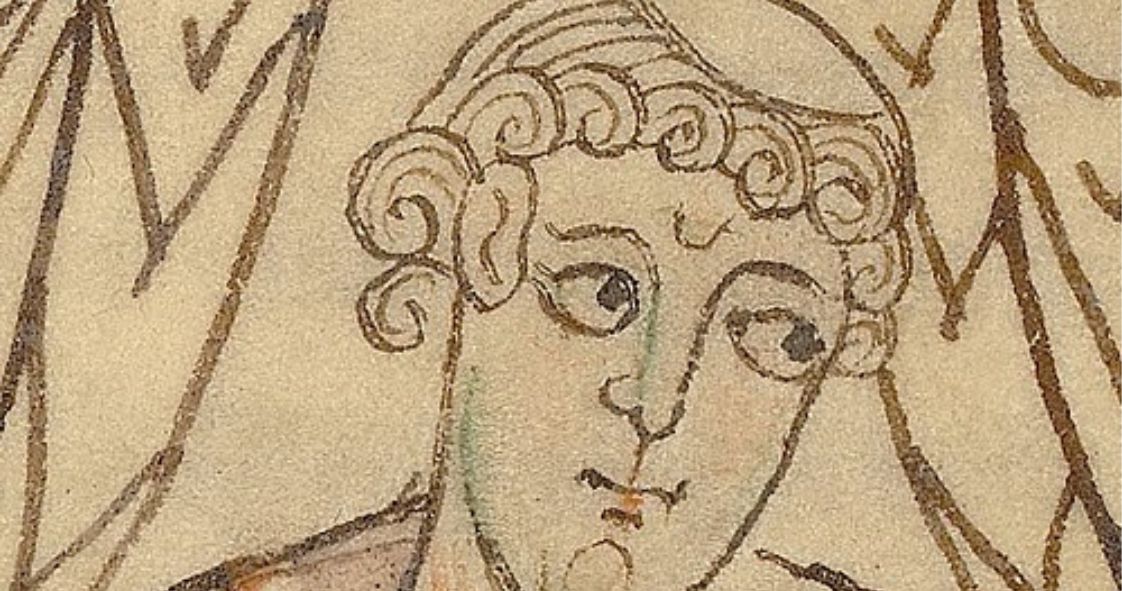
St Anselm (1033-1109), originally from northern Italy, joined the Benedictine order in France in his youth, where he excelled as a teacher and spiritual director in the monastic school. Later as Abbot of the monastery of Bec he paid several visits to England; his Christian wisdom and experience of Church government resulted in him later being chosen as Archbishop of Canterbury. In this role Anselm suffered from the political disputes of the time and the relations between Church and state, which led to him spending some periods in exile in France. Anselm’s legacy to the Church has centred on his theology, in which he is known for the Latin motto fides quaerens intellectum (faith seeking understanding) expressing the close relationship between divine faith and human reason (a topic which in recent times Pope St John Paul II, making use of St Anselm’s writings, took up in his 1998 encyclical Fides et Ratio). Anselm’s monumental contribution to philosophy as well as theology led to him being declared a Doctor of the Church in 1720. Among other papal teachings on this great teacher and Christian saint is that of Pope St Pius X in his encylical letter Communium Rerum (1909) specifically on St Anselm. The Holy Father notably quoted the words of the Roman breviary: “he was singularly esteemed by all as a model of sanctity and doctrine”.
(Image: Portrait, Life and Conversation of Anselm of Canterbury, Flemish manuscript of 12th century)