
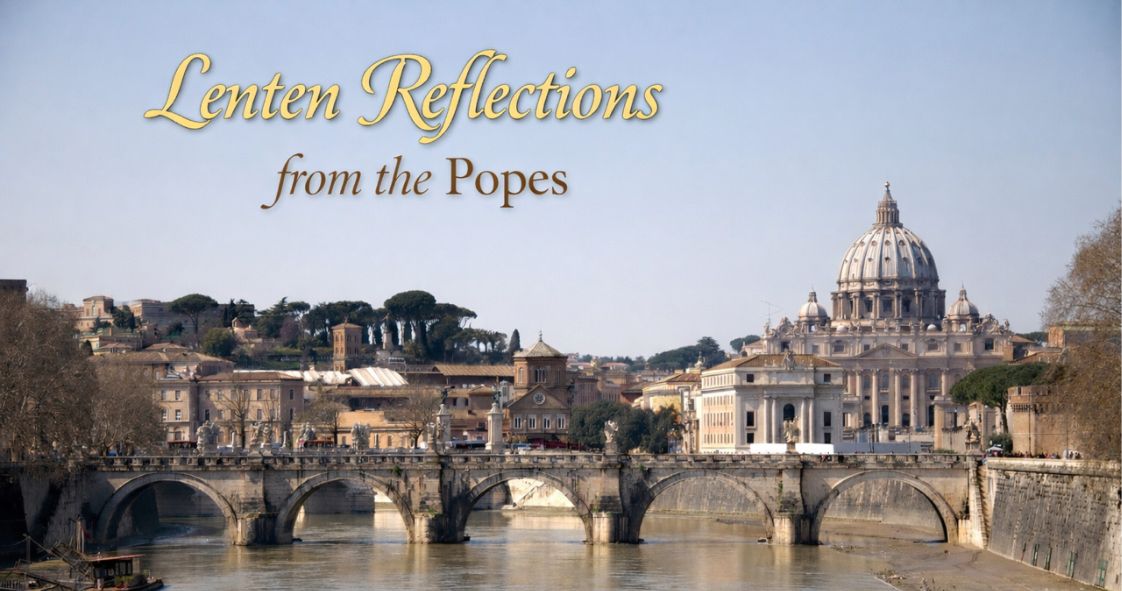
In this three week series, we look at some recent teachings of the Popes on the three-fold Lenten discipline of prayer, fasting and almsgiving. This week we hear from Pope Benedict XVI on the “prayer book of the bible”, the book of Psalms from the Old Testament. Benedict proposes the psalms as a rich source of prayer for Christian believers, revealing to us the “heart of God”. If we make the words of the psalms our own, Benedict teaches, we encounter the God who inspired them, we learn who he is, but also “we learn to be a human being, to be ourselves.”
“… the Psalms teach how to pray. In them, the word of God becomes a word of prayer — and they are the words of the inspired Psalmist — which also becomes the word of the person who prays the Psalms.
This is the beauty and the special characteristic of this Book of the Bible: the prayers it contains, unlike other prayers we find in Sacred Scripture, are not inserted in a narrative plot that specifies their meaning and role. The Psalms are given to the believer exactly as the text of prayers whose sole purpose is to become the prayer of the person who assimilates them and addresses them to God. Since they are a word of God, anyone who prays the Psalms speaks to God using the very words that God has given to us, addresses him with the words that he himself has given us. So it is that in praying the Psalms we learn to pray. They are a school of prayer.
Something similar happens when a child begins to speak, namely, he learns how to express his own feelings, emotions, and needs with words that do not belong to him innately but that he learns from his parents and from those who surround him. What the child wishes to express is his own experience, but his means of expression comes from others; and little by little he makes them his own, the words received from his parents become his words and through these words he also learns a way of thinking and feeling, he gains access to a whole world of concepts and in it develops and grows, and relates to reality, to people and to God. In the end his parents’ language has become his language, he speaks with words he has received from others but which have now become his own.
This is what happens with the prayer of the Psalms. They are given to us so that we may learn to address God, to communicate with him, to speak to him of ourselves with his words, to find a language for the encounter with God. And through those words, it will also be possible to know and to accept the criteria of his action, to draw closer to the mystery of his thoughts and ways (cf. Is 55:8-9), so as to grow constantly in faith and in love.
Just as our words are not only words but teach us a real and conceptual world, so too these prayers teach us the heart of God, for which reason not only can we speak to God but we can learn who God is and, in learning how to speak to him, we learn to be a human being, to be ourselves.”